Compound Interest Calculator
Use this compound interest calculator with a monthly contribution to see year-by-year growth in a clear balance chart.
Quick answer: Compound interest means you earn interest on your earlier interest as well as your deposits. Starting with £10,000 and adding £200 a month at 7% a year for 20 years grows to about £144,573, of which £86,573 is interest. Enter your own balance, deposit, rate and years to see the yearly growth.
How to use the Compound Interest Calculator
- Enter your starting balance. Type the amount you already have, or 0 if you are starting from nothing.
- Add deposits, rate and years. Enter the monthly deposit, the expected annual return and how many years you will save.
- Read the growth table. See the final balance, total contributions, interest earned and a year-by-year chart.
Formula & worked example
Formula: Monthly rate = (1 + rate ÷ n)^(n ÷ 12) − 1. Balance = previous balance × (1 + monthly rate) + contribution.
Example: 1,000 at 10% compounded yearly for one year, no contributions: 1,000 × 1.10 = 1,100.
Method & source: Compound-growth formula with periodic contributions (end of month). See how we test our calculators.
Next step: try savings goal or loan repayment.

Compound Interest, Explained
Compound interest shows how money grows when interest is earned on both your original deposit and on the interest already added. Over long periods this snowball effect is what makes regular saving and investing so powerful.
This compound interest calculator with a monthly contribution lets you add money every month, choose how often interest compounds, and see the balance year by year.
Growing a Balance With Contributions and Interest
Enter your starting amount, monthly contribution, interest rate, time period and compounding frequency.
- Compounding frequency: Annually, semi-annually, quarterly, monthly or daily.
- Monthly contributions: Added at the end of each month.
- Final balance: Total value at the end of the period.
- Split: How much is your own money and how much is interest.
- Year-by-year table and chart: The balance broken down for every year.
Rates are treated as nominal annual rates. Real returns will vary, so use results as an illustration, not a guarantee.
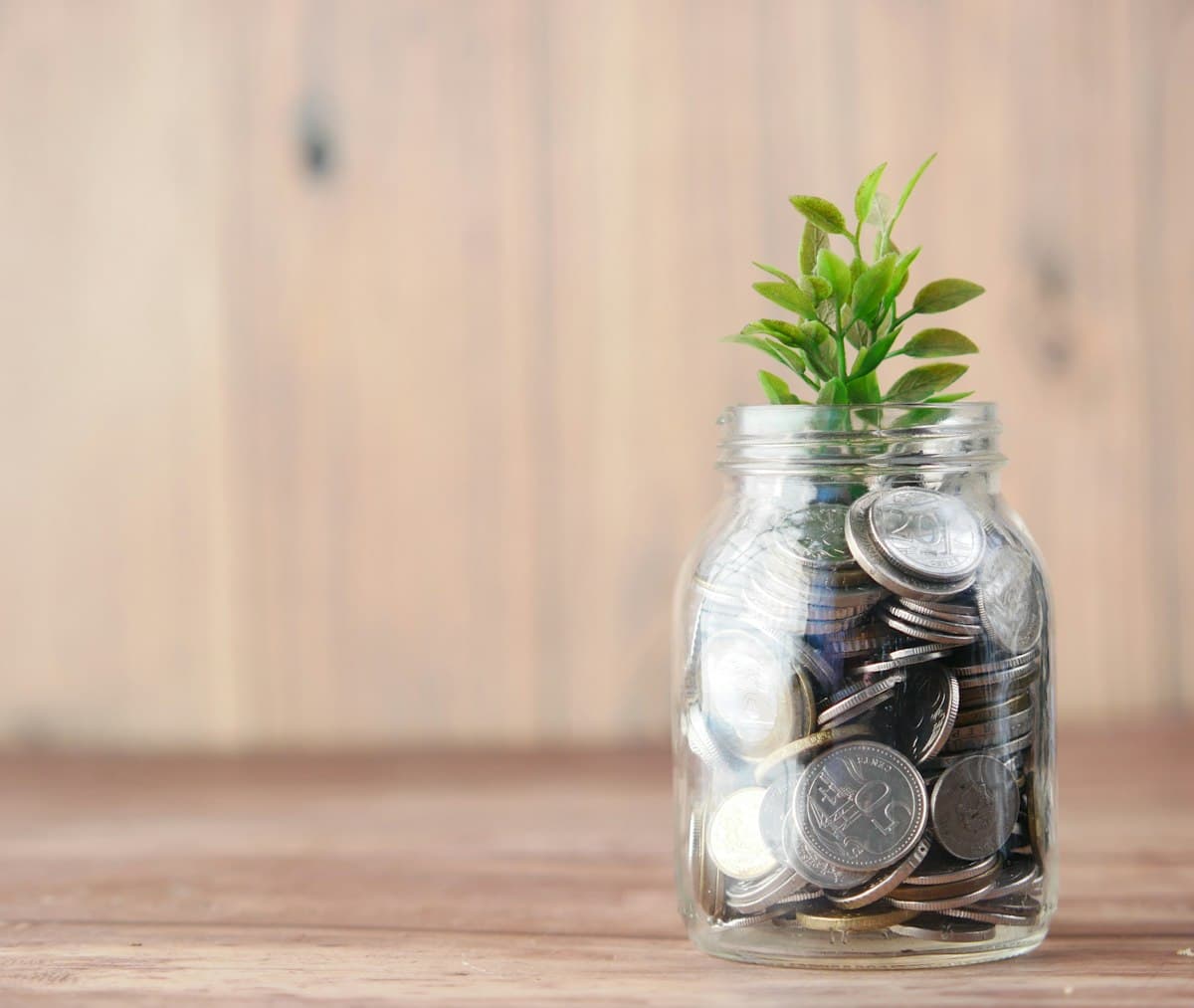

Why Compound Interest Matters
Time is the biggest ingredient in compounding. Starting early can matter more than saving a larger amount later.
- See how monthly contributions build wealth over decades.
- Compare different interest rates and time horizons.
- Understand why starting early beats catching up.
- Plan retirement, education and long-term savings.
- Learn how debt with compound interest grows against you.
A year-by-year chart makes the acceleration of compounding visible in a way a single number cannot.
Worked walkthrough: ten years of saving
Starting with 2,000 and adding 150 every month at 5% a year, compounded monthly, the balance after ten years is about 26,586. Your own money makes up 20,000 of that (2,000 plus 120 payments of 150), so roughly 6,586 is interest. The year-by-year table shows the balance passing 10,000 in about the fourth year, and the interest share grows each year because earlier interest earns interest itself. Doubling the time to twenty years does much more than double the interest – that is compounding at work.
Practical tips for Compound Interest calculations
- Time matters more than most people expect. Starting five years earlier can beat contributing much more later.
- The rate you enter is a nominal annual rate. Real investment returns vary, so test a low, medium and high scenario.
- Compare compounding frequencies to see the effect: more frequent compounding helps, but the size of the gain is small at typical rates.
- Fees reduce returns. If a fund charges 1% a year, subtract it from the rate you enter for a more realistic view.
- The tool does not adjust for inflation or tax. Treat the final balance as a nominal figure, not future purchasing power.
Compound interest versus simple interest
Simple interest is earned only on the original amount. Compound interest is earned on the original amount and on the interest already added, so growth accelerates. 10,000 at 6% for 20 years earns 12,000 of simple interest and ends at 22,000, but with yearly compounding it grows to 32,071, and with monthly compounding to 33,102.
Compounding frequency and the effective rate
The rate you enter is a nominal annual rate. More frequent compounding pays interest on interest sooner, so the effective annual rate is a little higher than the nominal rate. A nominal 6% compounded monthly is an effective 6.17% a year. Compare investments and accounts on the effective rate whenever their compounding differs.
Why starting early matters more than contributing more
Time is the strongest input. Saving 200 a month for 30 years at 6% grows to about 200,903 from 72,000 of contributions. Saving 400 a month for only 15 years also puts in 72,000, yet ends at about 116,327. The early saver’s money simply has longer to compound.
Small rate differences and fees
A percentage point looks small but compounds into a large gap. Starting with 10,000 and adding 200 a month for 20 years, a 6% return ends at about 125,510 while 5% ends at about 109,333, roughly 13% less. A fund charge of 1% a year works exactly like a 1-point cut to your return, so enter the rate after fees.
A quick estimate: the rule of 72
Dividing 72 by the annual rate gives a rough number of years for money to double. At 6% that is 12 years; the exact figure is 11.9. The calculator’s year-by-year table and chart give the precise path, including how much is contributions and how much is interest.
Limits and related tools
The result is a projection at a steady rate, not a forecast. Real investment returns vary and are not guaranteed, and the tool does not adjust for inflation or tax. Compound interest also works against borrowers, and the loan repayment calculator shows the other side. To work towards a fixed target, use the savings goal calculator.
Frequently Asked Questions (FAQs)
Enter your initial deposit, monthly contribution, annual interest rate and years. Each month the balance grows by the periodic rate and your contribution is added.
It is how often interest is added to the balance. More frequent compounding gives slightly higher growth at the same nominal rate.
Simple interest is only calculated on the original amount. Compound interest is calculated on the original amount plus previously earned interest.
At the end of each month, after that month’s interest has been applied.
No. Investment returns vary and fees or tax may apply. The calculator assumes a constant rate for the entire period.
It helps, but modestly. £10,000 at 5% for 10 years grows to about £16,289 with annual compounding and about £16,470 with monthly compounding. Regular deposits and the number of years usually matter far more than the compounding frequency.
Enter 10,000 as the starting amount, your expected annual rate and 10 years. The result shows the final balance, the interest earned and the growth multiple.
A = P(1 + r/n)^(nt), where P is the principal, r the annual rate, n the compounding periods per year and t the years. Monthly contributions are added on top, and the calculator handles them for you.
Yes. A year-by-year balance chart shows how contributions and interest build up over time.
The result shows total contributions, interest earned and the interest share of the final balance, so you can see how much compounding is doing.
Estimates only – not financial advice. Results assume a constant interest rate, regular payments and no fees, taxes or inflation unless stated. Real accounts and loans differ, and past or assumed returns are not guaranteed. This tool is not financial or investment advice; check your own account or loan terms and speak to a qualified adviser. See our full disclaimer.
Guides that use this calculator
- Compound Interest With Monthly Deposits: Worked Examples at 3%, 5% and 7% – Saving £200 a month at 7% for 20 years grows to £104,185 on £48,000 paid in. Formula, a 3%/5%/7% table and why starting early beats saving more.