Freelancing & Business
Freelance Day Rate in the UK for 2026: How to Work Out What to Charge
To keep £40,000 after income tax in 2026/27 you need a day rate of £365.63 on 1,104 billable hours. Worked examples for £30,000 to £75,000 goals.

Written by Ahad NoorPublished 7 min read
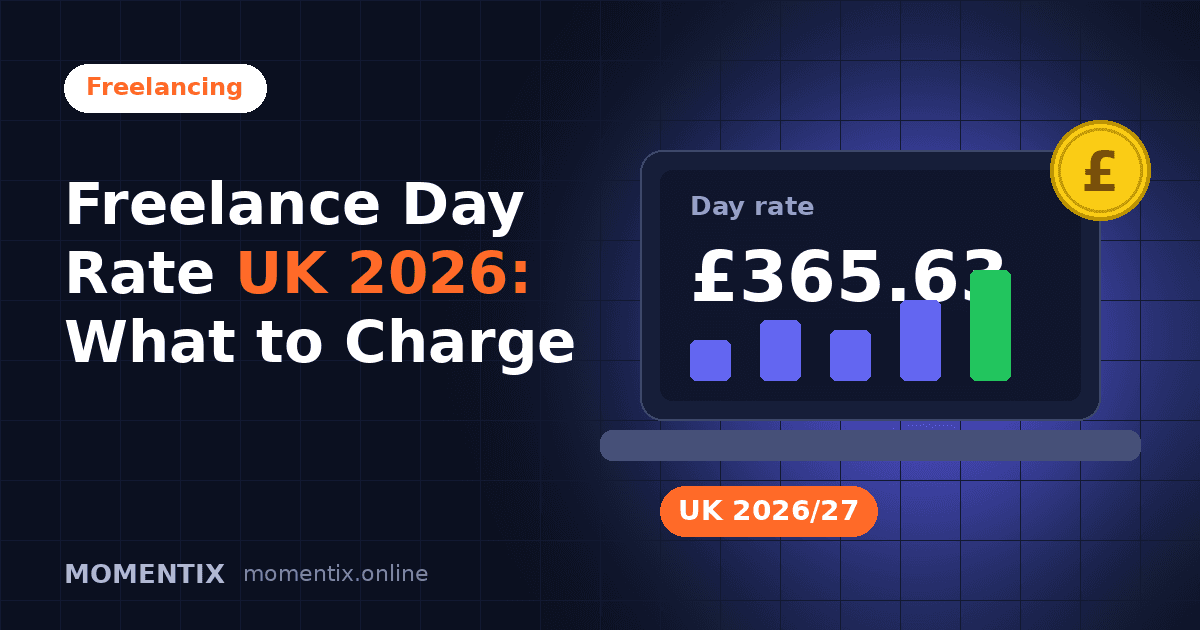
Your day rate has to pay for much more than a salary would: your income tax, your business costs, your holidays and all the hours you cannot bill. Using the freelance rate calculator's formula, a freelancer who wants £40,000 a year after income tax in the 2026/27 tax year needs a day rate of about £365.63. A £40,000 salary divided by 260 working days would suggest only £153.85.
This guide shows the working step by step, then the day rate for five income goals from £30,000 to £75,000, and how it changes with the share of your time you can bill and the weeks you take off. The tax figures come only from the rates held in the calculator's configuration (England, Wales and Northern Ireland, last checked on 29 September 2026), and self-employed National Insurance is not included. It is a supporting guide to UK take-home pay explained.
Contents
How is a freelance day rate worked out?#
The calculator starts from the income you want to keep and works backwards: add the tax you will pay, add your business expenses, then divide by the hours you can actually bill. The day rate is the hourly rate multiplied by 8.
The Freelance Rate Calculator's formula
Income before tax = take-home goal ÷ (1 − tax rate)
Revenue needed = income before tax + expenses for the year
Billable hours = hours per week × billable share × (52 − weeks off)
Hourly rate = revenue needed ÷ billable hours; day rate = hourly rate × 8
Worked example: £40,000 take-home, England, 2026/27
Assumptions: 40 hours a week, 60% billable, 6 weeks off, £300 a month of expenses. Income tax only, from the 2026/27 rates in the site's configuration (Personal Allowance £12,570); National Insurance is not included.
- Profit needed so that profit minus income tax is £40,000: £46,857.50 (income tax £6,857.50, a tax rate of 14.6%).
- Expenses for the year: £300 × 12 = £3,600. Revenue needed: £46,857.50 + £3,600 = £50,457.50.
- Billable hours: 40 × 60% × (52 − 6) = 1,104.
- Hourly rate: £50,457.50 ÷ 1,104 = £45.70. Day rate: £45.70 × 8 = £365.63.
A project of 80 billable hours would be priced at about £3,656.34 on the same basis.
You can see this in the tool: open the £40,000 example in the calculator fills in the same numbers, with the tax rate entered as 14.6348% to match the working above.
Day rate for take-home goals from £30,000 to £75,000#
Each row finds the profit that leaves the goal after income tax, using the 2026/27 bands in the site configuration, and then applies the formula above with £300 a month of expenses, 40 hours a week, 60% billable and 6 weeks off.
| Take-home goal | Profit before income tax | Income tax | Tax rate | Hourly rate | Day rate |
|---|---|---|---|---|---|
| £30,000 | £34,357.50 | £4,357.50 | 12.7% | £34.38 | £275.05 |
| £40,000 | £46,857.50 | £6,857.50 | 14.6% | £45.70 | £365.63 |
| £50,000 | £62,386.67 | £12,386.67 | 19.9% | £59.77 | £478.16 |
| £60,000 | £79,053.33 | £19,053.33 | 24.1% | £74.87 | £598.94 |
| £75,000 | £106,080.00 | £31,080.00 | 29.3% | £99.35 | £794.78 |
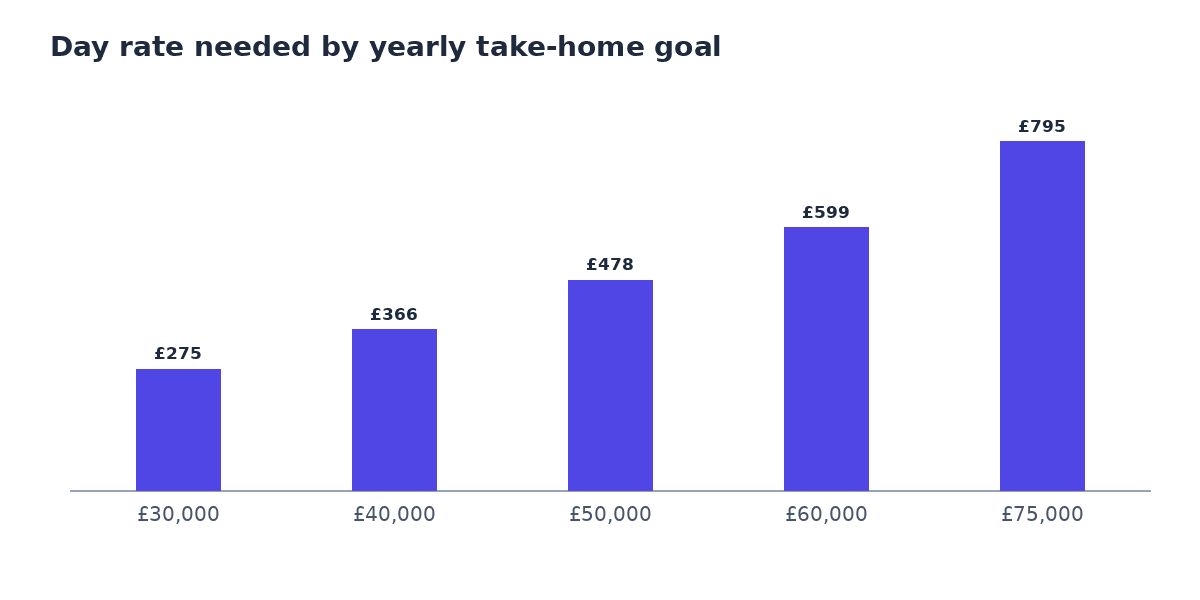
The jump between rows is bigger than the goal alone suggests, because income tax takes a larger share as profit rises: 12.7% at the £30,000 goal and 29.3% at £75,000. The £75,000 row also includes the Personal Allowance being withdrawn on profit above £100,000.
How billable time and weeks off change the day rate#
Two inputs move the day rate more than most people expect: how much of your working week you can bill, and how many weeks you do not work. The tables keep the £40,000 goal and change one input at a time.
| Billable share | Billable hours a year | Hourly rate | Day rate |
|---|---|---|---|
| 50% | 920 | £54.85 | £438.76 |
| 60% | 1104 | £45.70 | £365.63 |
| 70% | 1288 | £39.18 | £313.40 |
| 80% | 1472 | £34.28 | £274.23 |
| Weeks off | Working weeks | Hourly rate | Day rate |
|---|---|---|---|
| 4 weeks | 48 | £43.80 | £350.40 |
| 6 weeks | 46 | £45.70 | £365.63 |
| 8 weeks | 44 | £47.78 | £382.25 |
If only half your time is billable the day rate is £438.76, against £274.23 at 80%. Admin, sales and unbilled work are the main reason a freelance day rate is far above a salary divided by working days.
What these figures leave out#
If you charge VAT, it is added on top of your rate and is not part of your income; the VAT calculator works out the net, VAT and gross amounts. To turn the result into an hourly pay comparison, the hourly to salary calculator converts hourly rates to a yearly figure.
Before you quote a day rate
- Enter your real expenses, not a guess: software, equipment, insurance and any workspace.
- Be honest about billable time. Count admin, sales and unpaid revisions as unbilled.
- Include every week you do not work, including holidays and sickness.
- Add what the calculator leaves out: National Insurance, pension, student loan and VAT.
- Compare the result with the day rate for your skills in your market before you commit.
Common mistakes#
Mistake: Dividing the salary you want by 260 working days.
Instead: £40,000 ÷ 260 = £153.85, less than half of the £365.63 above. A freelance rate also has to cover tax, expenses, holidays and unbilled hours.
Mistake: Using the same tax rate for every income level.
Instead: The tax rate rises with profit: 12.7% at a £30,000 goal and 29.3% at £75,000 in these tables.
Mistake: Forgetting that the day rate is for an 8-hour day.
Instead: The calculator's day rate is the hourly rate times 8. If you work shorter days, price by the hour instead.
Mistake: Leaving out National Insurance.
Instead: It is not in these figures. Add it from GOV.UK before you rely on the rate.
Try the tool
Freelance Rate Calculator
Enter your income goal, expenses, tax rate, hours and weeks off to get the hourly rate, day rate and a project price.
Open the Freelance Rate CalculatorFrequently asked questions#
Decide the take-home income you want, add the income tax on it, add your yearly expenses, then divide by your billable hours and multiply the hourly rate by 8. For £40,000 after income tax, with £300 a month of expenses, 40 hours a week, 60% billable and 6 weeks off, the day rate is £365.63 on the 2026/27 rates.
Because it has to cover income tax, business expenses, holidays and unbilled time such as admin and sales. £40,000 ÷ 260 days is £153.85; the same goal as a freelancer needs about £365.63 a day on the assumptions in this guide.
No. The tax rate in these figures comes from Income Tax only, using the rates in the site's configuration. Self-employed National Insurance is not included, so check GOV.UK and add it before you set your price.
The calculator starts at 40 hours a week with 60% billable and 6 weeks off, which gives 1,104 billable hours a year. Use your own numbers: a lower billable share raises the day rate sharply (£438.76 at 50%, £274.23 at 80% on a £40,000 goal).
No. VAT is added on top of your price if you are VAT-registered and is not part of your income. Use the VAT tool to work out the net, VAT and gross amounts.
Enter the hours in the calculator's project field to get a project price. For 80 billable hours on the £40,000 example it is about £3,656.34.
Sources
- GOV.UK – Income Tax rates and Personal Allowances (checked 29 September 2026)
Ahad Noor
Ahad Noor builds and maintains Momentix, including its calculators, converters and the guides on this blog.
Each guide is checked against the matching Momentix tool, so the worked examples show the same figures the tool gives for the same inputs.